Advanced Water Heater Performance Testing Systems: The Core of R&D and Quality Control in Professional Laboratories
Nov 24, 2025
An advanced water heater performance testing system is a sophisticated, high-precision automated platform designed for comprehensive evaluation. Its primary objective is to quantify a water heater's energy efficiency, heating capacity, operational stability, and safety parameters. These systems are indispensable in professional laboratories, serving critical roles in both the research and development (R&D) phase (for design optimization) and the quality control (QC) process (for product certification) within the water heater manufacturing industry.
I. System Architecture and Operational Principles
A standard, professional water heater performance testing system typically comprises the following core components:
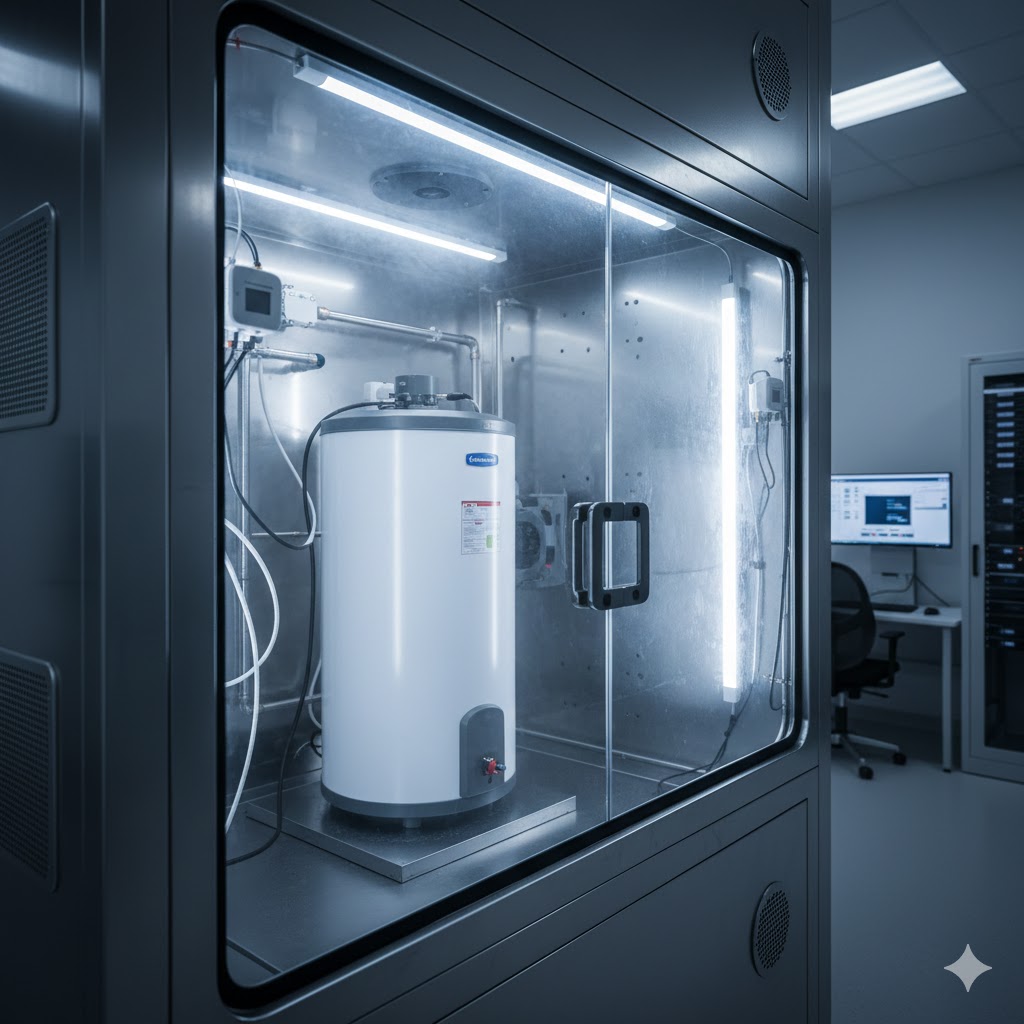
1. Environmental Chamber (or Test Bay)
Function: Provides controlled ambient temperature and humidity conditions that strictly adhere to national and international standards (e.g., GB, IEC, AHRI). This simulates the water heater's operation under various climatic conditions.
Key Aspect: Ensures the repeatability and accuracy of test results, which is crucial for certification and comparison.
2. Precision Water Loop Control and Measurement System
Components: Includes a sophisticated constant temperature water tank, high-accuracy flow meters, electric modulating valves, and pressure sensors.
Function: Precisely controls inlet water temperature, pressure, and flow rate. This allows for the simulation of various user water draw patterns, such as continuous flow or intermittent usage scenarios.
Criticality: The accuracy of the flow meters is paramount, as it directly impacts the precision of energy efficiency calculations.
3. High-Fidelity Data Acquisition (DAQ) System
Core Elements: Industrial-grade data acquisition cards, an array of thermocouples (T-type or K-type), and other high-precision sensors.
Function: Real-time, synchronous collection of data from hundreds of measurement points, including various temperatures (water, surface, flue gas), current, voltage, and gas consumption (for gas water heaters).
Significance: High sampling rates (typically per second or faster) are crucial to accurately capture transient performance during dynamic test cycles.
4. Advanced Software Control and Data Analysis Platform
Function: Automatically controls the water loop and heating system according to pre-programmed standard test procedures (e.g., 24-hour standby loss, peak draw tests). Upon completion, it automatically generates comprehensive reports, calculates energy efficiency metrics (such as APF, COP, or thermal efficiency), and performs advanced data visualization.
II. Key Performance Metrics Tested by the System
These sophisticated systems can comprehensively evaluate numerous critical performance indicators of water heaters, including:
Test Category
Key Performance Indicator
Measured Parameters
Typical Application (Standards)
Energy Efficiency & Thermal Performance
Thermal Efficiency ($\eta$) / Coefficient of Performance (COP)
Input energy (gas/electric), heated water volume, temperature rise
Evaluates energy conversion efficiency; determines energy rating.
Standby Loss
Electrical or gas consumption over 24 hours
Assesses insulation effectiveness and thermostat energy consumption.
Hot Water Delivery
Rated Capacity / Peak Draw Volume
Total continuous hot water delivery (at specified temperature)
Evaluates the actual hot water supply capability and thermal reserve.
Temperature Stability
Outlet water temperature fluctuation range ($\Delta T$)
Assesses the temperature control system's adaptability to flow and inlet temperature changes.
Safety & Electrical Performance
Electrical Safety (Shock/Leakage Protection)
Insulation resistance, leakage current
Ensures compliance with national safety standards.
Over-temperature/Over-pressure Protection
Safety valve activation pressure, over-temperature cut-off point
Ensures system reliability under abnormal operating conditions.
Combustion Characteristics (Gas WH)
Flue Gas Composition
CO, CO$_2$ content, exhaust gas temperature
Evaluates combustion efficiency and pollutant emissions, ensuring safety and environmental compliance.
III. Key Technologies and Future Trends
Current performance testing systems are rapidly advancing towards higher levels of automation, intelligence, and integration:
High-Precision Load Simulation: Systems are becoming capable of more realistically simulating complex and variable household hot water usage patterns, such as combined shower, hand wash, and kitchen sink demands.
Cloud Computing & Big Data: Integration with cloud platforms enables remote monitoring, global quality benchmarking, long-term performance tracking, and advanced predictive analytics based on vast datasets.
Non-Contact Measurement Techniques: Adoption of infrared thermography and other non-intrusive methods minimizes interference with the Device Under Test (DUT), enhancing measurement accuracy and speed.
The establishment of advanced water heater performance testing systems is fundamental to ensuring the standardization, high quality, and superior energy efficiency of water heater products in a competitive global market.